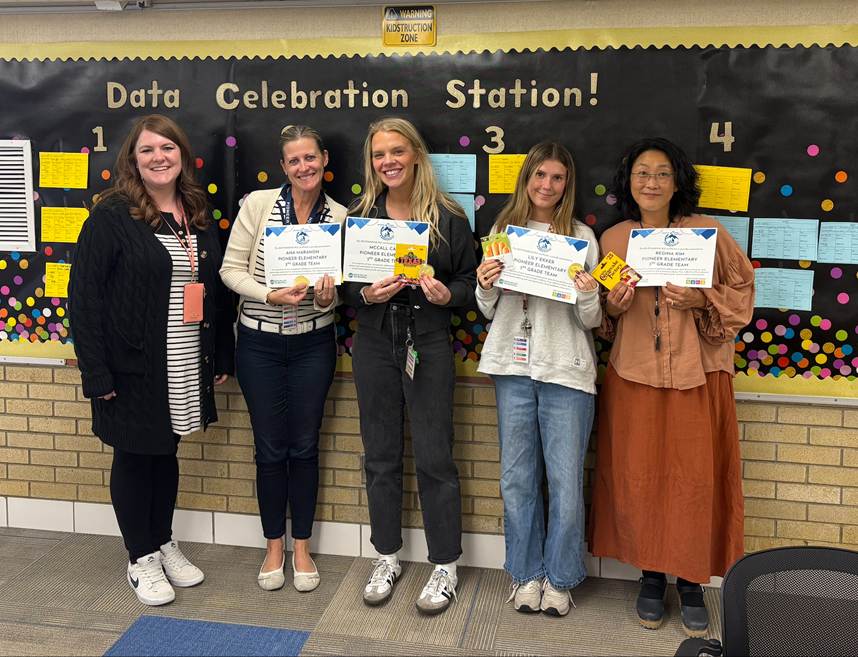
One of our core commitments in Granite is improving student achievement by improving instruction. This month, we recognize the 3rd grade PLC at Pioneer Elementary for demonstrating how meaningful collaboration can translate into improved student learning.
The team’s work closely reflects DuFour’s four critical PLC questions.
What do we want students to learn, and how will we know if they have learned it?
The team has worked tirelessly to develop and refine Common Formative Assessments (CFAs) that identify student proficiency by standard, aligned with GSD proficiency expectations. They also incorporate spiral reviews into each CFA to continually monitor priority standards and know where students are and what they need next.
What do we do when students have not learned it?
Teachers use CFA data to identify specific needs and then collectively determine their response. They strategically use small-group instruction and paraeducator support to individualize interventions according to student needs.
How do we improve our collective practice?
This team works together constantly—not only during scheduled PLC time, but during planning and other available times. They share strategies, resources, and expertise, coordinate their instruction, and analyze data with an eye toward solutions. This collective approach helps ensure students receive a consistent, high-quality learning experience regardless of their assigned teacher.
Most importantly, there is evidence that this collaboration is making a difference. Last school year, the team’s middle-of-year growth data was among the top 10 in Granite in both ELA and mathematics.
This Pioneer team reminds us that an effective PLC is more than time to meet. It is a commitment to collective responsibility for student learning—using evidence to determine what students need and working together to respond.
Thank you to the 3rd grade Pioneer Elementary team for providing such a strong example of PLC work in action.