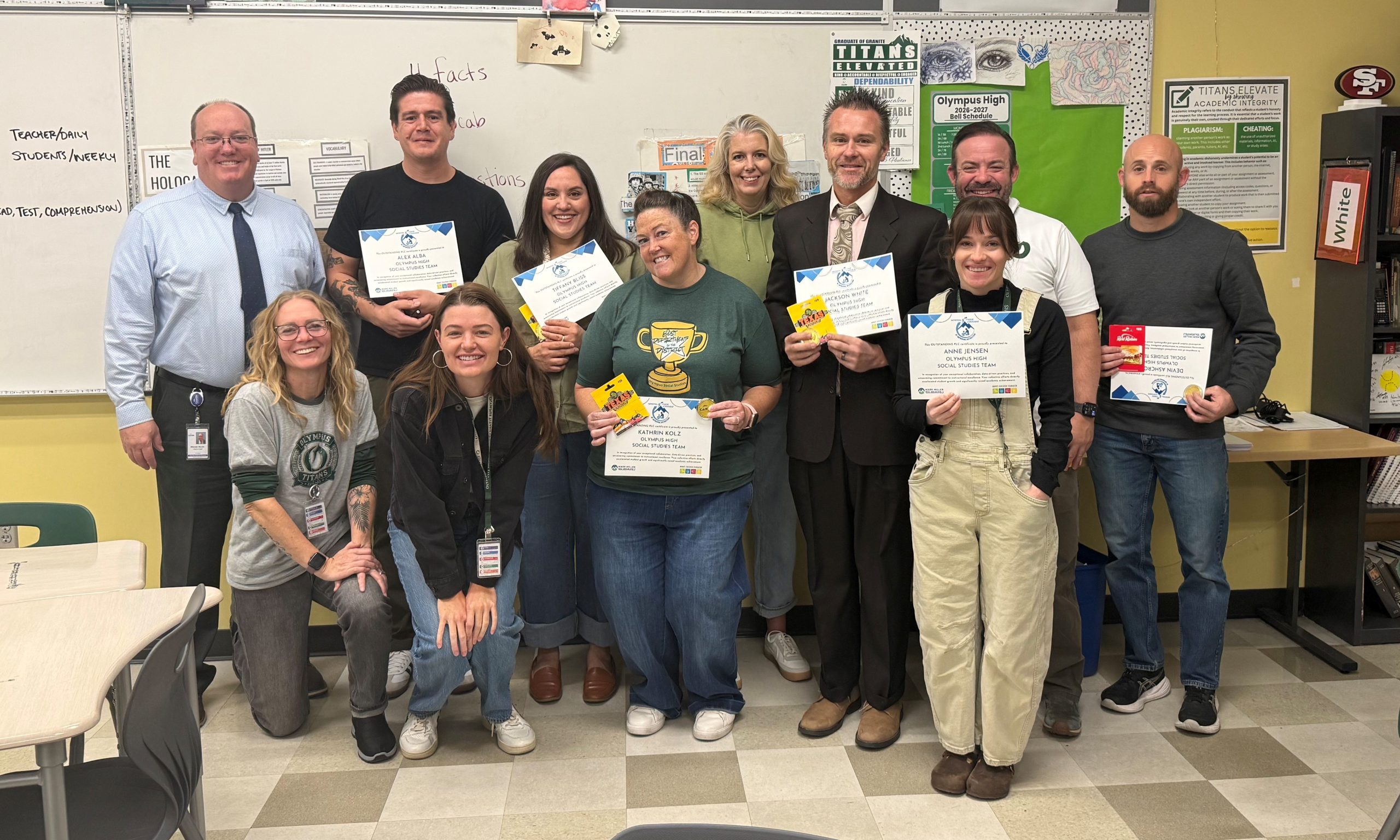
Our collective commitment to improving student achievement by improving instruction is at the heart of our work as a school district. One of the most powerful vehicles for accomplishing this is an effective Professional Learning Community (PLC). However, the effectiveness of a PLC is not measured by how frequently its members meet, but by what teachers do together, how their collective efforts improve instruction, and, ultimately, how those efforts impact student learning.
This week, we recognize the Social Studies PLC at Olympus High School for exemplifying several of the essential components of an effective PLC.
A Relentless Focus on Student Learning
Effective PLCs collectively identify essential standards, develop common formative assessments (CFAs), and analyze evidence of student learning to determine which students have demonstrated proficiency and which need additional support. The Olympus Social Studies team demonstrates this commitment by collaboratively developing assessments and using multiple measures of student learning, including writing, speaking, listening, and comprehension checks. They use this evidence to intentionally plan interventions and extensions that address the specific needs of their students.
Collective Responsibility for Student Achievement
When students are not learning, effective PLCs move beyond simply identifying the problem. They collectively determine what changes in instruction or additional support are necessary. The Olympus team demonstrates a willingness to learn from one another and seek assistance from district PLC coaches and curriculum specialists. They recognize that no individual teacher possesses all the expertise necessary to meet every student’s needs and that their collective expertise is one of their greatest assets.
A Culture of Collaboration and Continuous Improvement
Effective collaboration extends beyond scheduled PLC meetings. Members of the Olympus Social Studies team communicate throughout the week, regularly sharing instructional strategies, resources, successes, and challenges. They demonstrate the professional vulnerability necessary to acknowledge when something has not worked and invite their colleagues to help them improve. Their willingness to seek guidance from English Language Arts curriculum specialists to strengthen student writing in social studies is an excellent example of educators continually striving to improve their instructional practice.
A Commitment to Consistency and Instructional Quality
Every student deserves access to high-quality instruction, regardless of the teacher to whom they are assigned. Effective PLCs work to ensure that essential learning expectations are consistent and that effective instructional practices are shared across classrooms. The Olympus team understands that individual excellence is strengthened through collective improvement. Their commitment to supporting one another helps ensure that both teachers and students benefit from the expertise of the entire team.
A Commitment to Results and Mutual Accountability
Effective PLCs produce more than agendas and meeting minutes. Their work results in actionable instructional plans, evidence of student learning, targeted interventions, and opportunities for extension. The Olympus Social Studies team maintains PLC workbooks that document instructional plans, common formative assessments, student performance data, and intervention and extension plans. They hold one another accountable for remaining engaged in this meaningful work.
The strength of this PLC is not simply that its members are individually effective educators. It is that they have created a culture in which every teacher is committed to learning, improving, and contributing to the success of the entire team. They understand that collaboration is not the end goal; it is the means by which we improve instruction and increase student achievement.
We congratulate the Olympus High School Social Studies PLC and thank its members for providing an example of what meaningful professional collaboration can look like. We encourage every PLC across Granite School District to reflect on these practices and consider how its collective work can further strengthen instruction and improve learning outcomes for every student.
Thank you for your continued commitment to our students, to one another, and to the ongoing improvement of instruction across Granite School District.